Visit Merzouga: Your Complete Guide to the Sahara's Golden Dunes
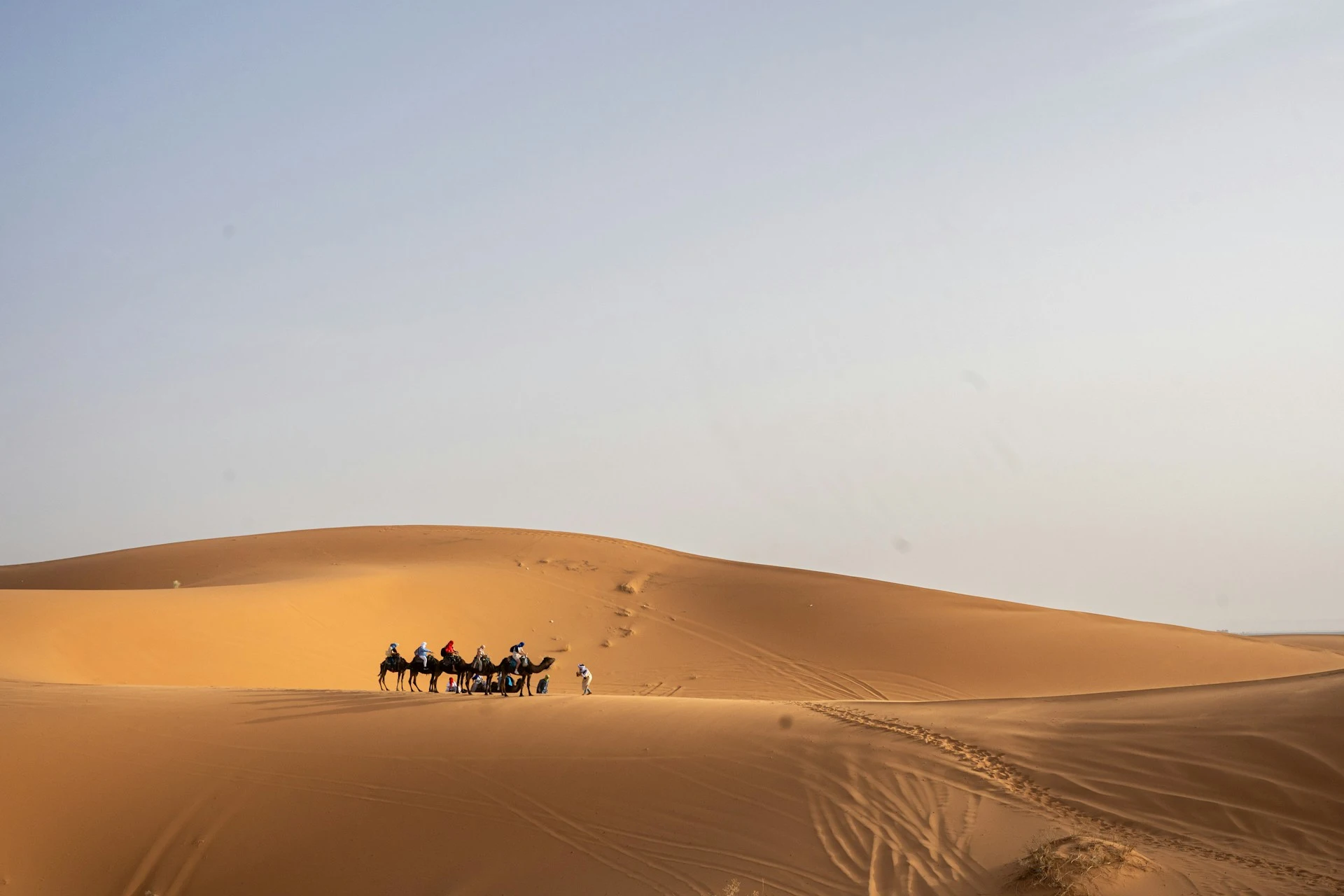
If you plan to visit Merzouga, you are heading to the place where Morocco's tarmac gives way to sand and the Sahara begins. This small village in the southeast sits at the foot of the Erg Chebbi dunes. It is the easiest gateway to a real night in the Merzouga desert: a camel trek at sunset, dinner around a fire and a sky full of stars.
This guide covers where Merzouga is, how to get there, the best time to go, what to do, where to sleep and a simple itinerary. It is written for travellers who like the freedom of a Merzouga road trip, with practical tips from Drive Plus, the car rental company in Agadir.
Where is Merzouga and why is it worth the trip?
Merzouga is in the Drâa-Tafilalet region of southeastern Morocco. It lies about 35 km southeast of Rissani, 20 km from Erfoud and roughly 50 km from the Algerian border, according to Middle East Trips. The village is small, with around 1,700 residents, so everything here revolves around the desert.
The star attraction is the Erg Chebbi dunes, which travel writers describe as the highest and most extensive dunes in Morocco (Malika in Morocco). At sunrise and sunset the sand turns from gold to deep red, which makes this one of the most photogenic spots in the Sahara desert Morocco has to offer.
Merzouga also suits many kinds of traveller. Couples come for the camps, families for the camel rides and quad bikes, photographers for the light, and first-time visitors because it delivers the desert in a single, easy stop.
How to get to Merzouga by car
Merzouga is remote but reachable, and a car is the most flexible way to go. How to get to Merzouga depends on where you start, but most visitors arrive by road from Marrakech, Fes, Ouarzazate or Errachidia (MarHire).
From Agadir or Marrakech
There is no short way to reach the dunes from the Atlantic coast. Plan a two-day drive with an overnight stop, ideally in Ouarzazate or Tinghir, rather than one exhausting day behind the wheel. Ouarzazate is also the perfect place to see Ait Ben Haddou, the fortified village that makes the first leg worth it by itself.
If you are starting in Marrakech, our Marrakech travel guide will help you fill a day or two before the long drive south and east.
From Fes
The route from Fes follows the N8 into the Middle Atlas, past Ifrane and Azrou, then joins the N13 towards Midelt and Errachidia, as described in the Moon travel guide. Many travellers stop overnight in Errachidia before the final stretch to the dunes.
Other ways to arrive
- By air: Errachidia has the nearest airport, around two hours from Merzouga, and there are flights from Fes.
- By bus: an overnight bus runs from Fes to Merzouga, taking around 12 hours (KimKim).
- By tour: organised trips leave from Marrakech and Fes if you prefer not to drive.
Driving tips for the Merzouga road trip
- Choose the right car. A comfortable compact is fine on the paved road, but an SUV rental gives you more ground clearance and comfort over long distances.
- Go for unlimited mileage. This trip adds up to many kilometres, so check our car rental with unlimited mileage.
- Know the rules. Read our complete guide to driving in Morocco and check whether you need an international driving licence.
- Keep the rental on the road. Some tracks around Merzouga need a 4x4 with an experienced local driver. Leave your rental at the camp or at the parking area where the pavement ends, and book a guided excursion for the sand.
- Fuel up early. Fill the tank in the larger towns such as Errachidia or Rissani before the final stretch.
Need a car for the trip? You can book online with Drive Plus with no deposit and no credit card, and choose Agadir airport, Marrakech airport or the city as your pickup point.
Best time to visit Merzouga
The best time to visit Merzouga is spring (March to May) and autumn (September to November). Days are warm, nights are cool enough to sleep comfortably in a desert camp, and the light on the dunes is at its best (Local Morocco Tours). Weather data points to April as the sweet spot, with highs near 29°C and lows near 15°C (BestDateWeather).
Season | What to expect | Our verdict |
Spring (Mar–May) | Warm days, mild nights, clear light | Best |
Summer (Jun–Aug) | Extreme daytime heat, tiring for treks | Avoid if you can |
Autumn (Sep–Nov) | Pleasant days, cooler evenings | Best |
Winter (Dec–Feb) | Sunny days but very cold nights in the dunes | Good with warm layers |
If you travel in winter, pack a real jacket and a hat for the night. The temperature drops fast after sunset. After rare rains, the seasonal lake of Dayet Srji can fill up and attract flamingos, which makes spring and autumn even more interesting for nature lovers.
Best things to do in Merzouga
For such a small village, there is plenty to fill two or three days. Here are the things to do in Merzouga that travellers rate most highly, in the order we would plan them.
1. Ride a camel across the dunes
A Merzouga camel trek at sunset is the classic experience, and for good reason. You ride out into the Erg Chebbi dunes as the light turns copper, then sleep in camp. Climbing on and off a camel is a little awkward, but it is part of the fun. Ask your host to time the ride so you catch both sunset and sunrise.
2. Sleep in a desert camp
A night in a Merzouga desert camp is the highlight for most visitors. Expect a Berber-style tent, a hot dinner, drumming around the fire and an unbelievable night sky. A cheap camp is not always the best value: a clean, warm tent and good timing for sunrise and sunset matter more (Memphis Tours).
3. Try sandboarding, quad biking and 4x4 excursions
If you want adrenaline, sandboarding down the dunes and quad biking are popular. A 4x4 excursion takes you to places a rental car should not go, such as nomad camps and the old fossil sites. Always book with a licensed local operator and agree the route and price in advance.
4. Listen to Gnawa music in Khamlia
The nearby village of Khamlia is known for its Gnawa musicians, whose energetic performances are a favourite cultural stop. It is a good way to spend the afternoon before heading to the dunes, and the cultural centre is an inexpensive visit (Expedia).
5. Visit the souk in Rissani
Rissani is the closest town with regular connections and a lively market, famous for dates, spices and local crafts. Go in the morning when the market is busiest, and try local dishes while you are there. Our Moroccan food guide lists the dishes worth ordering on the road.
6. Meet nomad families and explore the surroundings
Visiting Berber nomads in their black tents is one of the most authentic experiences. Further afield you can reach prehistoric rock carvings about 10 km off-road from Taouz, the Hassilabied oasis and, after rain, the flamingos of Dayet Srji (Journal of Nomads).
7. Watch the stars
The sky above the dunes is exceptionally clear. Bring a headlamp, a warm layer and, if you like photography, a tripod for low-light shots.
Where to stay and what to pack
Camp or hotel?
There are two main choices. Desert camps sit among the dunes and are the most memorable option, ranging from simple Berber tents to luxury tents with private bathrooms. Guesthouses and hotels in Merzouga village offer proper beds, air conditioning in summer and easy road access, which suits travellers who dislike camel rides or cold nights.
Many visitors combine both: one night in a camp for the experience, one night in a guesthouse to rest. Before you book, check what is included: dinner, breakfast, the camel ride, the transfer and heating in winter.
On the way, you may need a stop in Errachidia. Hotels such as Kenzi Rissani and Kasbah Fenguig are suggested by Malika in Morocco for travellers breaking up the drive.
What to pack for the Sahara
- A scarf or light cotton wrap for sun, wind and sand
- Sunglasses, sunscreen and a hat
- Warm layers for the night, even outside winter
- Closed shoes that are easy to empty of sand
- A dry bag or zip bags to protect phones and cameras
- A power bank and spare batteries
- A headlamp or torch, and a tripod for night photos
- Cash in small notes for tips, snacks and small purchases
A small daypack is enough for the camp night. Leave the rest of your luggage in the car or guesthouse.
A simple 4-day Merzouga road trip itinerary
Two nights in Merzouga is ideal, although one night still works on a tight schedule. Here is a relaxed plan starting from Agadir or Marrakech.
- Day 1: drive to Ouarzazate. Break the journey at Ait Ben Haddou and sleep in Ouarzazate. Read our Ait Ben Haddou and Ouarzazate road trip guide for stops and timings.
- Day 2: continue to Merzouga. Leave early, stop for lunch on the way and arrive in time for a sunset camel trek and a night in camp.
- Day 3: sunrise, Khamlia and Rissani. Watch the sunrise over the dunes, then visit Khamlia for Gnawa music and the Rissani market. Try a 4x4 or sandboarding session in the afternoon.
- Day 4: start the return drive. Head back by a different route if you have time, or break the journey again before reaching the coast.
Make the trip longer
- Add a stop in Taroudant, known as Morocco's little Marrakech, on the way back.
- Combine the desert with the mountains: see our Toubkal trekking guide.
- Short on time? The Timlaline sand dunes near Agadir are a quick taste of the dunes in a single day.
- Looking for a good price for a long trip? Read how to find a cheap car rental in Agadir without getting scammed.
Merzouga FAQ
Is Merzouga worth visiting?
Yes. If you want one unforgettable night in the Sahara without a complicated expedition, Merzouga and the Erg Chebbi dunes are one of the easiest and most rewarding places to do it.
How many days do you need in Merzouga?
Two nights is ideal, which gives you time for a camp night, a sunrise and a cultural day. If your trip is a week or less, one night in the dunes is still worth it.
Can I drive my rental car onto the dunes?
No. Keep your rental car on paved roads and park it at the camp or at the end of the road, then book a local 4x4 or camel excursion for the sand. Check your rental conditions before you travel.
Do I need a visa to visit Merzouga?
Many nationalities can enter Morocco without a visa, but rules depend on your passport, so check the latest requirements before you go. If you plan to drive, also read our guide on the international driving licence in Morocco.
What is Merzouga famous for?
Merzouga is famous for the Erg Chebbi dunes, camel treks at sunset, desert camps and authentic Berber hospitality.
To visit Merzouga is to trade the coast for the sand, and the journey is half the adventure. Go in spring or autumn, give yourself at least two nights, sleep in the dunes once and take your time on the road.
Ready to start? Book your car with Drive Plus for free pickup at Agadir airport, unlimited mileage, no deposit and full coverage insurance, or call us on (212) 6 25 43 29 29 and we will help you choose the right car for your Merzouga road trip.